Taylor Wimpey is working with MiTek (UK & Ireland) to deliver optimised floor designs at its Minsmere development in Keynsham, Somerset, as the housebuilder continues to roll out homes built to Future Homes Standard requirements.
The 70-home scheme, which includes a mix of energy-efficient apartments and houses, is being designed to support Taylor Wimpey’s long-term ambition to deliver net zero homes. Properties are equipped with air source heat pumps and mechanical ventilation with heat recovery (MVHR), placing greater emphasis on early-stage coordination between structure and building services.
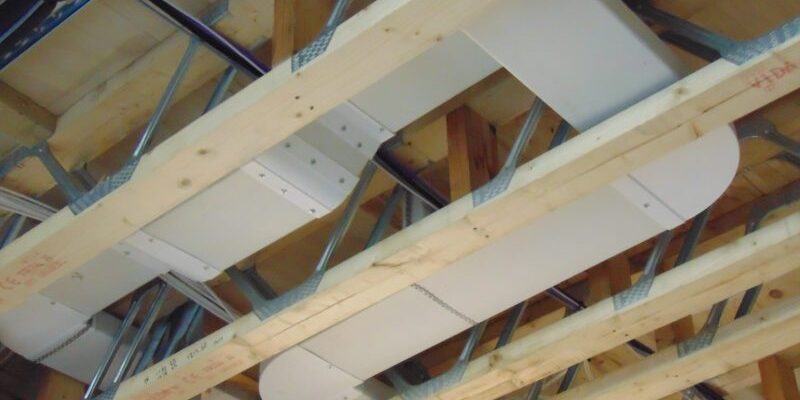
To support this, Taylor Wimpey has specified Posi-Joist across the development, working closely with MiTek to design the floor layouts for each house type. It’s one of several schemes MiTek is supporting the housebuilder with.
Jimmy Close, MiTek Head of Business Development, Offsite and Residential, is leading the collaboration and says Posi-Joist is the preferred solution as homes become increasingly services-led.
“Posi-Joist meets all the demands of building energy efficient homes.” said Close. “As housebuilders introduce more energy-efficient technologies, they need construction systems that can adapt. The open-web design of Posi-Joist provides the space required for MVHR ducting and services, without the need for complex or costly site-based solutions.”
At Minsmere, MiTek has used its PAMIR 3D software to bring together the Posi-Joist floor system and MVHR layouts in a single federated digital model. This allows the project team to eliminate clashes between structure and services before construction starts and when changes are easier and cheaper to make.
In practice, this means fewer changes during the build and more certainty for follow-on trades. From experience, these issues tend to show up late if they are not addressed at design stage, often when programme pressure is already high.
The approach reflects lessons learned from pioneering research projects, including Energy House in Salford. That work highlighted the challenges of integrating MVHR with more traditional joist systems and helped inform how Posi-Joist can be applied at scale, for homes designed around whole-house ventilation and low-carbon technologies.
Jimmy added:
“The Minsmere development provides a clear example of how coordinated digital design and modern construction systems can help housebuilders meet rising performance standards, while delivering homes that are efficient, comfortable and built for the future.”