From the Shop Floor to the Boardroom: Honoring UK Manufacturing Pioneer, Dorothée Pullinger
Hallmark Fabrication reflect on Women’s History Month by looking beyond the technical drawings to the people who built the UK’s engineering heritage.
While names like Brunel and Stephenson dominate the history books, the story of British manufacturing is also built on the ingenuity of pioneering women. One of the most remarkable figures in 20th-century industrial history: Dorothée Pullinger (1894–1986).
Engineering a Modern Industry
Dorothée Pullinger was born into engineering; her father was a car designer, and she started her career as a drafter at Arrol-Johnston, one of Scotland’s leading car manufacturers. However, when the First World War began, the landscape of British manufacturing changed overnight.
It was during this period that Dorothée Pullinger truly defined herself as an industrial leader. She took on the monumental task of managing the Vickers ammunition factory in Barrow-in-Furness. This wasn’t just about managing logistics; it was about organizing and training a workforce of over 7,000 women in complex technical operations, welding, and precise metalworking.
She didn’t just oversee production; she engineered the system itself, proving that with the right structure and training, women were capable of unmatched precision on the shop floor. For this vital work, she was awarded an MBE in 1920.
The First Car “Designed for Women, Built by Women”
Pullinger’s legacy continued after the war. She recognized a glaring gap in the market: automobiles were designed by men, for men.
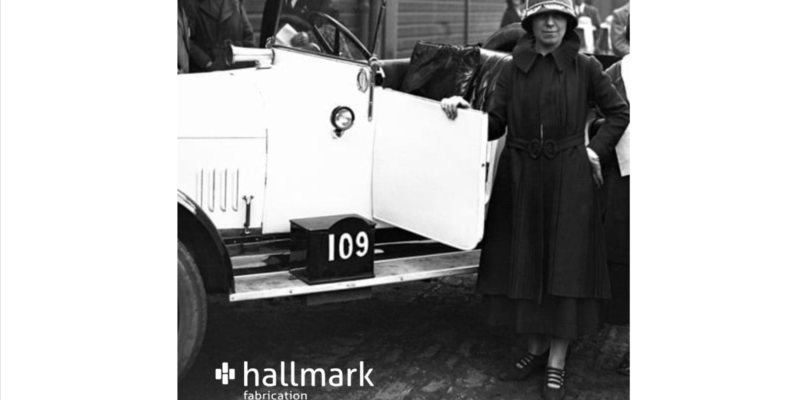
She went back to Arrol-Johnston and became the founding director of the Galloway Motors Ltd, located on the Solway Firth. Pullinger was the driving force behind the design and production of the Galloway car. This wasn’t just a regular car; it was specifically re-engineered for female drivers, featuring a smaller steering wheel, a raised driver’s seat for better visibility, and controls positioned for ease of use.
Crucially, the Galloway car was built by women. Dorothée structured the factory around a workforce of local women, creating an apprenticeship program that proved that manufacturing and technical skill were not gender-dependent.
Pullinger’s design philosophy mirrors what we strive for in fabrication today: that a final product must not only meet technical specifications (like weight, diameter, and tolerance) but also be intuitive and perfectly fit for its ultimate user.
Building a Legacy, Today
Dorothée Pullinger was a trailblazer, not only as an accomplished engineer but also as a champion of industrial opportunity. She was a founding member of the Women’s Engineering Society (WES) in 1919, ensuring that the next generation of engineers, both men and women, had a foundation to build upon.
Hallmark Fabrication, take immense pride in carrying this manufacturing heritage forward. When tackling a challenging fabrication project, precise to the millimetre, the company are reminded that ingenuity is a powerful, genderless tool that builds stronger industries.