The UK manufacturing sector is operating in a competitive and rapidly changing environment. For businesses like MPL Fabrications, investing in the future is about building the capability, skills and resilience needed to compete for the next decade.
Manufacturing has always been an industry that evolves. Machinery changes. Customer expectations change. Materials and processes change. Supply chains change. And the businesses that succeed are usually those prepared to adapt rather than wait for change to happen to them.
MPL Fabrications, has always believed that you can’t stand still. As a family-run engineering and fabrication business with decades of experience, the company understands the importance of combining the knowledge it’s built over the years with the technology and skills needed for the future, and that’s why investing is such an important part of our strategy – not just in machinery, but in people too.
UK manufacturing needs to keep moving forward
For manufacturers across the UK, the competitive landscape is challenging. Customers demand high-quality products (rightly so!), delivered quickly and reliably. Businesses need to manage costs carefully, while supply chains need to be increasingly resilient. At the same time, there is a growing expectation for manufacturers to invest in technology, improve efficiency and reduce unnecessary waste – there’s a LOT going on!
For smaller, independent manufacturers, these pressures can be particularly significant. Whilst MPL doesn’t necessarily have the scale of the largest manufacturers, it can compete in other ways.
It can be responsive. it can invest strategically. It can build long-term relationships. And it can develop the capability to provide customers with more services under one roof. That is the direction MPL Fabrications has chosen to take.
Over recent years, MPL has made significant investments in its manufacturing capabilities and the latest investment – Its Bodor I7 Laser Cutter was a particularly important step forward for it. This wasn’t just an upgraded machine, but something new to our factory.
With a 1.5m x 3m cutting bed, it gives us the ability to laser cut mild steel, stainless steel and aluminium up to 8mm, with certain smaller applications possible up to 10mm.
Previously, some laser-cut components needed to be produced externally. That introduced additional stages into the manufacturing process including transport, scheduling, handling and reliance on another supplier’s capacity.
Bringing that capability into MPL means we have greater control over the process. Cutting can move into bending. Bending can move into welding. Finished components can move into powder coating. And completed work can be stored securely before being delivered to the customer using our own vehicles.
The result is a much more connected and responsive manufacturing process, building capability, as well as adding equipment.c
Technology and people aren’t competitors. There is understandably a lot of discussion about automation and technology within manufacturing, but technology will never replace the people who work here.
Quite the opposite. MPL see technology as giving skilled people better tools to do their jobs.
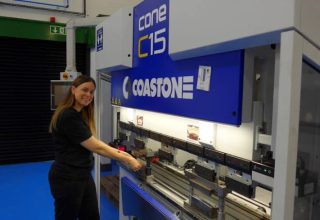
A laser can cut incredibly accurately. A CNC press brake can repeat a bend time after time. A CNC punch can produce consistent components across a large batch.
And while all of that is impressive, machinery doesn’t understand a customer’s requirements in the way an experienced engineer does. It won’t spot every potential problem like a decade of job knowledge will, and it doesn’t take pride in seeing a difficult project completed.
However, MPL’s workforce does, and that’s why its investment strategy has always included investment in people.
Experience is one of our biggest assets
MPL has employees who have spent decades developing their skills within engineering and manufacturing. Their welding team, who alone bring more than 75 years of combined experience to the workshop. That kind of knowledge is incredibly valuable. They understand how different materials behave; they know how a component needs to be prepped before welding, and it’s they who recognise when something isn’t quite right. They can look at a drawing and think ahead about how it will actually be manufactured. They’re the problem solvers when a job doesn’t go exactly to plan
And no new machine can buy you that experience!
That’s why retaining experienced people and developing new talent is so important to the future of MPL.
Building the next generation
MPL also have a responsibility to make sure that knowledge doesn’t stop with the current generation. Skills shortages(opens in new tab) are a significant challenge for UK manufacturing.
Businesses that want to remain competitive must consider giving younger people opportunities to see what a career in engineering and manufacturing can offer. That’s why engagement with schools and the local community is important.
The future workforce needs opportunities to learn from experienced people while also becoming comfortable with the technology that is transforming modern manufacturing.
The best combination is experience and fresh thinking.
Someone who understands the fundamentals of fabrication, working alongside someone who has grown up with digital manufacturing technology, can be an incredibly powerful combination.
Competing through capability
One of the biggest advantages of continued investment is that it allows MPL the ability to offer customers more services.
Its capabilities now mean that customers don’t necessarily need to coordinate several different suppliers to move a project from raw material to finished component.
Taking responsibility for more of the journey.
This means fewer handovers, less transport, better communication and greater control over delivery.
And for MPL, it means continuing to develop into the kind of manufacturing partner that businesses need in an increasingly competitive market.
Investment also creates resilience
The last few years have demonstrated just how vulnerable global supply chains can be.
Having greater manufacturing capability in-house doesn’t remove every challenge, but it can give businesses like MPL more options. It can cope more easily with increases in demand, quicker turnaround for batch production, or modifying components now that they’ve got these services to hand.
Resilience comes from having options.
From its beginnings as a small one-man operation, the business has developed into an established manufacturing company serving customers across Coventry, the Midlands and beyond.
It’s our intention to continue to develop it by investing in technology alongside our people – because the two only work in harmony when they’re developed together.
MPL are taking everything they’ve learned over the past four decades and combining it with the technology, skills and capability required for the next forty years.
Ultimately, that’s what staying competitive in UK manufacturing is about.
Keep learning. Keep investing. Keep improving. And, most importantly, keep your people at the heart of it.