Manufacturing capability is expected in the defence sector. Delivery confidence is what differentiates.
For defence primes, OEMs and tier suppliers risk mitigation in the defence sector is high priority. The challenge is rarely whether a supplier can make a component in isolation. The harder question is whether they can manufacture consistently, evidence compliance, protect programme timelines, and scale without introducing new risk. In a sector where quality, traceability and delivery performance are mission-critical, risk mitigation cannot be treated as an afterthought. It must be built into the manufacturing relationship from the outset.
That matters because the defence environment is becoming more demanding and increasingly uncertain. The UK Ministry of Defence’s Equipment Plan 2023–2033 covers more than 1,800 projects and allocates £288.6 billion, representing 49% of the forecast defence budget, to equipment and support over the decade. However, with the anticipated delay to the Defence Investment Plan, there is likely to be reduced short-term clarity on priorities, which could slow or reprofile elements of current defence spending. This adds a further layer of complexity for programmes already under pressure to plan and deliver against evolving requirements.
The same National Audit Office report found that forecast costs exceed the current budget by £16.9 billion, underlining the pressure on programmes to manage cost, schedule and delivery risk managing from day one, particularly where funding timelines may shift.
At the same time, the wider UK aerospace, defence, security and space sectors remain central to national security and capability, contributing £38.2 billion in value added, £38.7 billion in exports, and supporting 427,500 direct jobs according to ADS’ 2024 industry data. The demand signal is clear—but in the context of delayed strategic investment decisions, capacity, readiness and proven delivery are becoming even more important as differentiators.
For Universal Wolf, the answer is simple: reduce programme risk through verified credentials, evidenced performance, scalable capacity and a supply chain that is audited, not assumed. The supplied slide positions this clearly, grouping Universal Wolf’s defence manufacturing offer around five risk areas: quality, delivery, capacity, integration and programme risk.
Closing quality risk through verified credentials
Quality risk is one of the most visible threats in defence manufacturing. A non-conformance is not just a production issue; it can create delays, rework, additional inspection burden and lost confidence across the supply chain.
That is why independently verified credentials matter. Universal Wolf holds DIN 2303 Q2/BK1 for defence welding, ISO 3834-2 (link to welding for defence page) for fusion welding quality, JOSCAR registration for defence supply chain accreditation, and ISO 9001:2015 for quality management. These accreditations provide customers with confidence that quality systems are independently assessed, not simply self-declared.
In practice, this means defence customers can engage with a fabrication partner that understands the standards, documentation and inspection expectations required for safety-critical and mission-critical work. It also reduces onboarding risk by giving procurement, quality and engineering teams a clear evidence base from the beginning.
Closing delivery risk through evidenced performance
In defence, promises are not enough. Delivery confidence has to be proven.
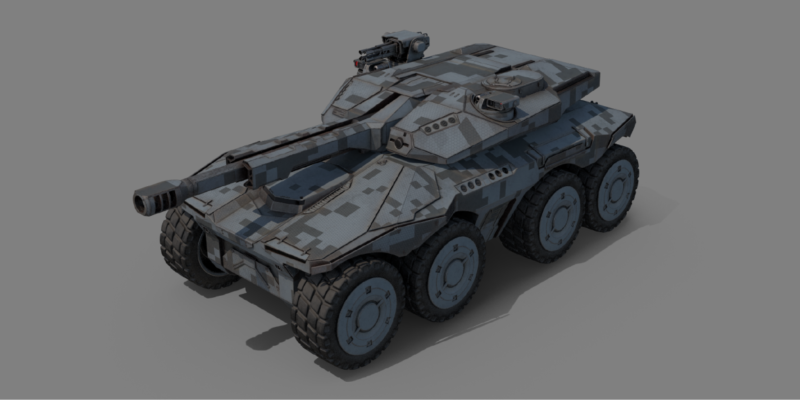
Universal Wolf’s work on the BAE Systems Tactica programme demonstrates this in action.
Across 172 vehicles and 150 line items, Universal Wolf achieved 99.97% quality and 100% on-time delivery, while onboarding in just three months.
The business has also supported BAE Submarines through indirect supply, working to BR 3939 compliance and undergoing BAE audit for maritime specifications.
These figures matter because they move the conversation from capability to confidence. Many suppliers can describe what they are able to do. Fewer can evidence that they have delivered complex, defence-related work at quality and pace, under audit conditions, for major programmes.
Closing capacity risk through scalable manufacturing
Defence programmes can change quickly. Demand can ramp, specifications can mature, and production requirements can shift from prototype to serial manufacture. A supplier that is capable at low volume but constrained at scale can become a programme risk.
Universal Wolf’s manufacturing footprint supports a more resilient model. The business operates from a 65,000 sq ft fabrication facility in Blyth, supported by 135 skilled colleagues, including coded welders to ISO 9606. It also has access to wider Group facilities, adding 100,000 sq ft of design, electrical and mechanical assembly, and test capability.
This combination of skilled people, fabrication space and Group capability helps customers reduce capacity risk by creating room for ramp-up, cross-functional collaboration and more integrated delivery.
Closing integration risk through supply chain readiness
In defence, supply chain weakness is often where programme risk becomes visible. Sub-tier suppliers, surface treatments, traceability and documentation can all affect delivery performance.
Universal Wolf addresses this through an audited sub-tier supply chain, supplier matrices, NDAs and traceability controls. Surface treatment capability includes wet paint and powder coating, with military coatings in progress. ERP-integrated traceability, route cards, barcode scanning and live reporting provide visibility through production.
This is important because integration risk is not only about whether parts arrive. It is about whether every stage of the process can be evidenced, controlled and aligned to programme requirements. For defence customers, that visibility supports better planning, stronger governance and fewer surprises.
Closing programme risk through structured NPI
New Product Introduction is where many risks either get resolved early or embedded into production. A structured NPI process helps protect quality, cost and delivery before serial manufacture begins.
Universal Wolf’s approach moves from prototype to Design for Manufacture, pre-production and serial production. A dedicated NPI team — including engineering, management and technical officers — is assigned to support onboarding. The process is risk-reduced through quality planning, agreed specifications and a signed-off plan before production starts.
For defence customers, this matters because early alignment reduces ambiguity. It ensures manufacturability, inspection requirements, documentation and production controls are considered before they become expensive problems.
The real differentiator: confidence
Risk mitigation in defence manufacturing is not achieved through one accreditation, one facility or one successful project. It comes from the way all of those elements work together.
Universal Wolf combines verified credentials, proven defence programme performance, scalable UK capacity, audited supply chain readiness and structured NPI. The result is a manufacturing partner designed to reduce risk across the full programme lifecycle — from onboarding and first article confidence through to repeatable serial delivery.
In a sector where capability is expected, confidence is earned. And for defence programmes under increasing pressure to deliver faster, better and with greater assurance, that confidence can be the difference between a supplier and a true manufacturing partner.