
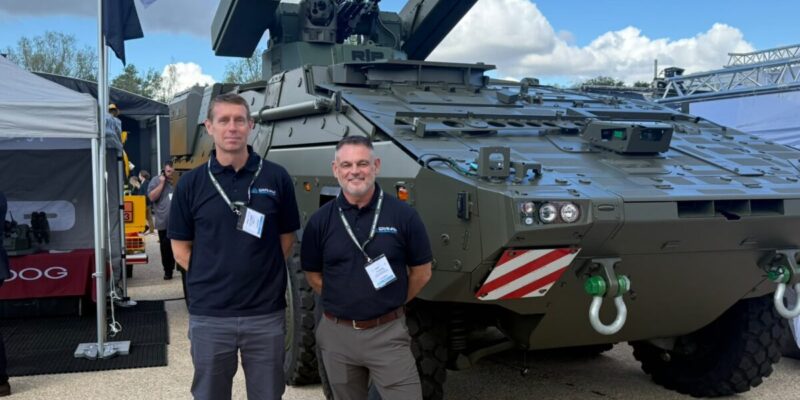
Graham Engineering has recently spent two productive days at DVD 2026, where discussions across the defence land equipment community reflected the changing demands being placed on the UK defence industrial base.
Representing Graham Engineering at DVD 2026 were Paul Waring, Chief Commercial Officer, and Patrick O’Malley, Welding Engineer. Their time at the event combined commercial and technical discussions with customers, industry colleagues and new contacts from across the defence sector.
Held at UTAC Millbrook, DVD provides an important opportunity for defence organisations, military stakeholders and the wider supply chain to meet, examine developing technologies and discuss the practical requirements behind current and future land programmes.
A defence sector entering a new phase
The conversations at DVD took place against a backdrop of increased national attention on defence readiness, procurement and industrial capacity.
The UK Government’s 2026 Defence Investment Plan provides for £298 billion of defence investment over the four financial years from 2026/27 to 2029/30. It includes an additional £15 billion for the plan and sets out a move to 2.7 per cent of GDP on core NATO defence spending from 2027/28. The Government says the investment is intended to improve warfighting readiness, modernise military capability and support economic growth.
Increased funding alone, however, will not resolve every challenge. The defence sector must translate national commitments into deliverable programmes, greater industrial capacity and procurement routes that allow suitable British manufacturers to contribute.
This means giving suppliers sufficient visibility to invest, maintaining realistic programme schedules and ensuring that procurement processes recognise manufacturing readiness as well as technical capability. For the supply chain, quality assurance, cyber security, documentation, traceability, financial resilience and the ability to move from development into repeatable production all remain important considerations.
Paul Waring, Chief Commercial Officer commented:
“The shift in defence investment is encouraging, but its success will depend on how effectively that commitment is translated into deliverable programmes and sustainable opportunities for the UK supply chain. DVD gave us a valuable opening to discuss those challenges directly with people from across the sector.”
The opportunity for UK SMEs
Small and medium-sized manufacturers have an important role to play in expanding UK defence capacity. They can provide specialist processes, engineering knowledge, production flexibility and additional sources of supply to support larger manufacturers and programme partners.
The Ministry of Defence’s SME Action Plan states that it wants to increase defence spending with British firms and SMEs, give smaller businesses a fair opportunity to compete for public contracts and reduce barriers to bidding. It also recognises the need for procurement reform, greater transparency and clearer routes into the defence market.
That direction is welcome. In practice, its impact will depend on whether appropriately qualified SMEs can gain earlier sight of requirements, reach the right procurement and engineering teams and secure a practical route through supplier qualification.
For Graham Engineering, events such as DVD provide a platform to listen as well as present capability. Understanding where organisations require specialist manufacturing support, additional capacity or a resilient second source is essential if discussions are to lead to technically and commercially relevant outcomes.
Paul Waring continues:
“There is considerable knowledge and specialist manufacturing capability within UK SMEs. We hope the increased focus on defence investment will create practical opportunities for those businesses to contribute, particularly where they can demonstrate the quality systems, security controls, technical capability and manufacturing discipline that defence programmes require.”
Manufacturing readiness matters
Defence manufacturing requires more than access to machinery. Suppliers may need to demonstrate controlled processes, reliable delivery, information security, appropriate accreditations and the ability to maintain manufacturing documentation and traceability throughout a programme.
Graham Engineering supports high-integrity and safety-critical manufacturing requirements through capabilities including complex fabrication, CNC machining, specialist welding, inspection, mechanical assembly and controlled manufacturing documentation.
The company’s confirmed defence-sector trust signals include JOSCAR registration, Cyber Essentials Plus certification and DIN 2303 Q2 BK1. GEL’s current Cyber Essentials Plus certification is supported by an internal certificate record.
JOSCAR provides a shared supplier due-diligence system for the UK aerospace, defence and security sectors. Government defence guidance states that registration can help buyers review supplier information and compliance, improve visibility and reduce procurement time. It also makes clear that JOSCAR is optional for direct Ministry of Defence contracts, although some strategic partners may require it for subcontracting opportunities.
These credentials do not guarantee contract awards. They do, however, help demonstrate that a manufacturer understands some of the assurance, security and governance expectations associated with working in regulated defence supply chains.
The wider opportunity for the UK is to ensure that increased defence investment strengthens sustainable domestic manufacturing capacity. That will require collaboration between government, prime contractors, Tier 1 organisations and capable SMEs, supported by clear requirements, proportionate supplier qualification and realistic routes from initial engagement into production.