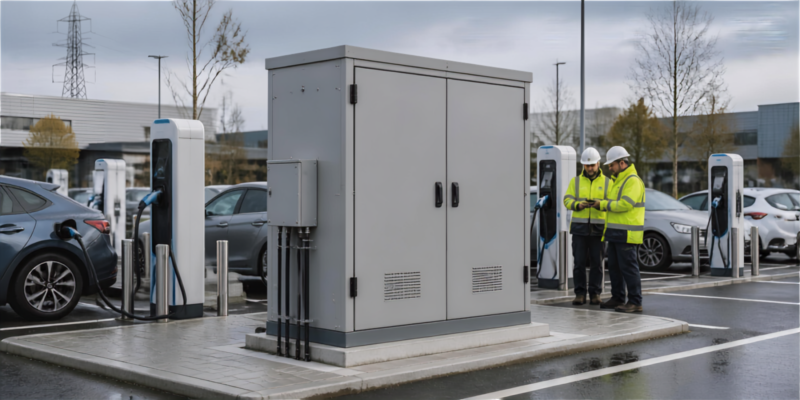
Engineers face many decisions when they plan EV charging installations. They often wonder how much space the feeder pillar needs for future utility upgrades. They also ask about room for metering and extra switchgear. A&T Enclosures team works with projects that connect directly to DNO supplies, building EV feeder pillars that handle these needs from the start.
The company design every EV feeder pillar with DNO connections in mind. The pillar serves as the main point where the distribution network operator brings power into the site. It distributes that power safely to multiple EV charge points. Proper planning at this stage prevents costly changes later. We make sure the enclosure supports the incoming supply cables and provides clear access for DNO staff.
Space Planning for Long-Term Use
Space inside the feeder pillar matters more than many realise. The company allocate dedicated areas for current equipment and for items that may arrive later. Design features are modular in layout. This approach lets the company fit busbars, circuit breakers, and monitoring devices in an organised way.
Raised plinths are used in many outdoor models. These plinths protect against water ingress and give installers better access to the base. Options include DIN rail mounting and gear plates. These features make it simple to add control devices as the site expands. Engineers appreciate the flexibility because it matches real-world project timelines.
Switchgear Considerations
Switchgear forms the heart of any reliable EV feeder pillar. A&T Enclosures support low-voltage distribution up to 3200A. This rating covers most commercial and public charging installations. The company can supply the pillar as steelwork only so teams can fit their preferred switchgear. It’s experienced technicians also install free-issued equipment when requested.
The company build secondary barriers behind the main doors. These barriers improve safety for anyone who works inside the unit. All follow BS EN 61439-2 standards for the form of separation. This gives users clear protection while they perform maintenance or inspections.
How A&T Builds Bespoke Feeder Pillars
A&T Enclosures handle every stage of production in its facility. Their engineers translate project requirements into precise fabrication instructions. This control keeps quality consistent and lead times reliable.
The company tests enclosures to relevant IEC and British standards, verifying ingress protection, mechanical strength, and electrical safety. Every EV feeder pillar leaves the site ready for installation.