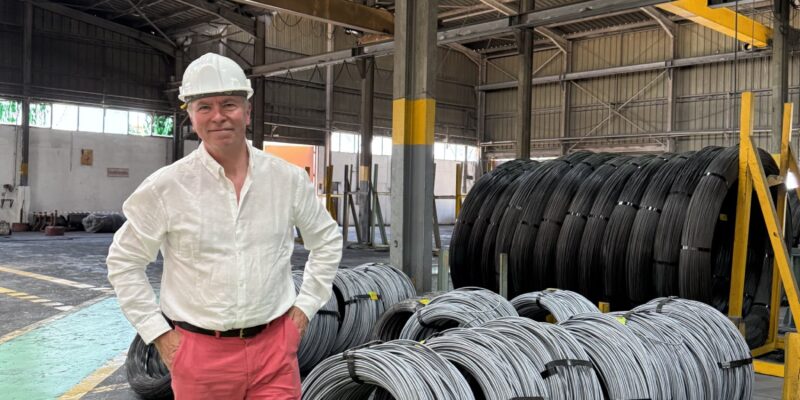
Nigel Roberts – MD of Megasteel and Chairman of Sweetnam and Bradley has spent over 40 years in the steel industry. He quotes “I find the new UK Steel Strategy deeply worrying.
Britain is now moving towards:
– tariffs
– quotas
– subsidy dependency
– procurement protection
– and the nationalisation of British Steel.
This is being presented as ‘supporting British industry’.I fear it may do the opposite.
Open markets force industries to innovate, invest, improve productivity and stay competitive. Protectionism often weakens those pressures and simply transfers costs elsewhere in the economy. And the steel industry is not just steelmakers.
It is: construction engineering, automotive fabrication, infrastructure, manufacturing and exporters. If steel becomes artificially expensive through quotas and 50% tariffs, downstream British industry becomes less competitive.
And here is the uncomfortable reality nobody wants to say out loud. If another country wants to subsidise steel production using its taxpayers’ money, then from the perspective of a steel-importing country like the UK, that can actually benefit manufacturers here in the UK through lower input costs.
Britain is now a relatively small steel producer globally. Our strength increasingly comes from higher-value manufacturing, engineering and technology. Cheaper steel helps those sectors compete.
The transition to scrap-based EAF steelmaking also worries me.
EAF absolutely has a role — but the idea that scrap alone can sustain a major advanced steel industry is highly questionable. As more countries move towards EAF production, global demand for high-quality scrap will rise sharply. The UK strategy itself acknowledges that demand for premium low-residual scrap could increase by 7–8 times.
So where will all this scrap come from? And once scrap quality becomes insufficient — which it inevitably does for many higher-grade steels — the industry must turn to Direct Reduced Iron (DRI). But DRI requires high-grade iron ore and enormous quantities of hydrogen or natural gas.
Where will that come from? Hydrogen itself requires vast amounts of electricity to produce, with major energy losses at every stage. Britain already struggles with some of the highest industrial electricity prices in the developed world. So are we really creating a globally competitive steel industry?
Or one permanently dependent on:
– imported raw materials
– subsidised electricity
– taxpayer support
– and political intervention?
And nationalisation? Britain tried that before.
It did not create a world-leading steel industry. It created inefficiency, political decision-making and long-term decline.
Steel succeeds when it is globally competitive — not permanently protected from competition”