Manufacturing in the United Kingdom is at a crossroads. The sector faces global competition, pressure to innovate, and the challenge of reducing environmental impact while improving efficiency. At the same time, it is dealing with a shortage of skilled workers that many experts describe as one of the greatest threats to future growth. Experienced engineers are retiring in large numbers, and too few younger people are joining the industry with the right skills to replace them.
This challenge is not unique to Britain. Around the world, advanced economies are trying to secure a future workforce capable of combining traditional craftsmanship with the digital technologies of Industry Four Point Zero. However, in the UK, the issue is made worse by a perception that manufacturing is less appealing than careers in services or technology.
One of the most effective ways to close this gap is through apprenticeships. They provide a structured route for people to gain both practical and theoretical knowledge, ensuring that businesses develop talent grounded in real-world experience. For companies in highly specialised sectors such as spring making and precision presswork, apprenticeships are not just helpful. They are essential for long-term success.
Micro Spring & Presswork, known within the industry as MSP, provides a strong example of how apprenticeships can nurture future engineers. Founded in 1964, the company has spent sixty years at the forefront of spring manufacturing, supplying components for aerospace, defence, energy, medical, and industrial applications. Today, MSP continues to invest in training, ensuring that its skills base evolves with new technology while preserving the expertise that ensures quality and reliability.
The State of UK Manufacturing Skills
The United Kingdom remains the ninth-largest manufacturing economy in the world, contributing around ten per cent of GDP and supporting more than two and a half million jobs. It is a sector that provides high-value exports and supplies vital components to industries such as aviation, defence, and medical technology. Yet it is also under pressure.
Reports by EngineeringUK and Make UK highlight a significant shortage of skilled workers. Estimates suggest that Britain needs tens of thousands of new engineers each year simply to maintain current productivity. As the average age of engineers increases, the risk of knowledge loss grows.
Manufacturing itself is evolving. Traditional hands-on skills remain vital, but modern roles now demand an understanding of CNC machinery, digital modelling, and quality systems that rely on accurate data and traceability. These skills cannot be learned through academic study alone. They require real workplace experience where theory and practice interact daily.
Schools and universities can inspire young people, but many still see engineering as outdated or unappealing. In reality, modern manufacturing is clean, high-tech, and global. Apprenticeships offer one of the best ways to show young people what the industry truly looks like today.
Without a steady flow of new talent, Britain risks falling behind in global competition. It could also weaken the supply chains that underpin critical sectors such as aerospace and defence. Small components like springs and pressings may seem insignificant, yet they are vital to the reliability and safety of complex systems.
Why Apprenticeships Matter
Apprenticeships combine structured education with hands-on training, making them particularly valuable in advanced manufacturing. Many processes cannot be fully understood in a classroom. For example, a spring maker must learn not only the theory of stress, load, and fatigue life, but also how different materials behave when coiled or tempered.
Working directly in a company allows apprentices to see how theory translates into practice. They learn to solve real challenges, such as adjusting a process to meet tight tolerances or identifying the cause of a quality issue. These experiences build problem-solving ability and confidence, qualities that are difficult to teach through study alone.
Apprenticeships also strengthen company culture. People who train within a business often develop a strong sense of loyalty and pride. They learn professional standards, teamwork, and communication as well as technical skills. For companies, this helps create a stable, committed workforce.
For the apprentices, the benefits are just as clear. They gain qualifications up to degree level while earning a wage, avoiding the debt associated with full-time study. More importantly, they acquire practical experience that makes them highly employable. Many progress quickly into senior engineering or management roles because they understand both the theory and the reality of production.
In advanced manufacturing, apprenticeships are not simply career pathways. They are a safeguard for the transfer of vital expertise between generations.
How Apprenticeships Work at MSP
At MSP, apprenticeships are a key part of the company’s long-term strategy. The business recognises that its future depends on people who can handle both traditional techniques and modern innovation. Apprentices are seen as future engineers and given meaningful responsibilities from the start.
Training begins with an introduction to the workshop environment, covering health and safety, manual handling, and precision. Apprentices quickly become familiar with tools and machinery, learning through observation and hands-on experience.
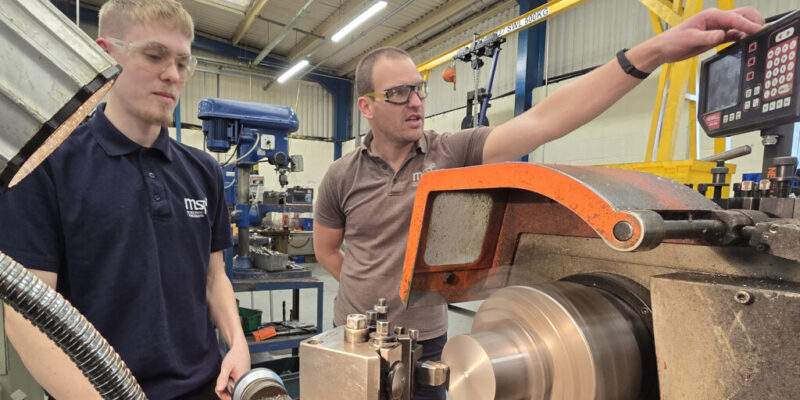
During the first year, apprentices often rotate between departments, including spring coiling, presswork, toolmaking, and inspection. This gives them a complete picture of how components move from raw material to finished product. As they advance, they begin to specialise. Some focus on toolmaking, learning to design and build precision tooling. Others develop expertise in CNC spring coiling, mastering the programming of machines that produce thousands of components to exact tolerances.
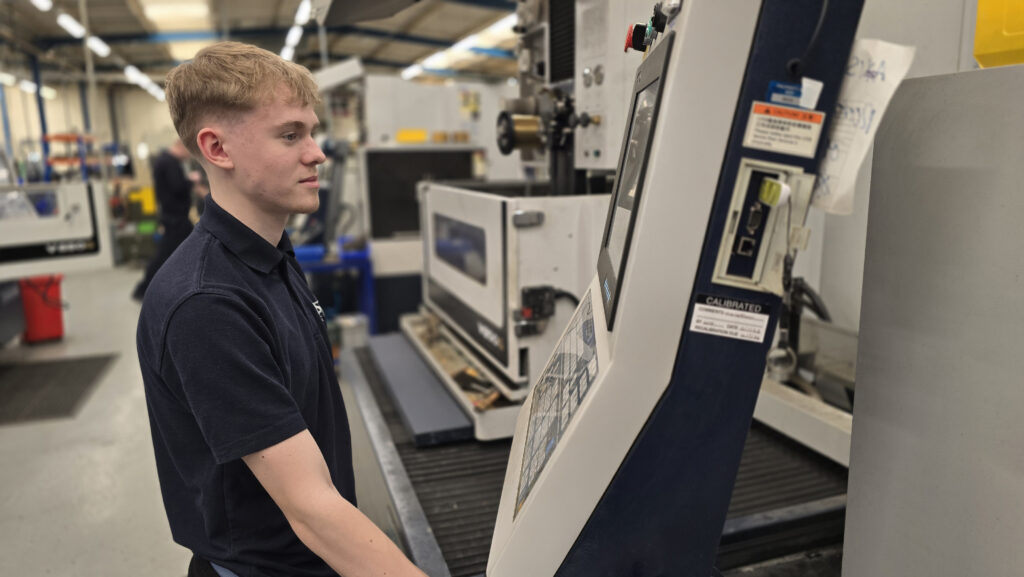
A clear example is Cameron, who joined MSP as a tool room apprentice in 2022. Now in his third year, he has progressed from basic maintenance tasks to contributing to new tooling solutions. His progress shows how apprenticeships provide a steady and rewarding pathway from novice to skilled contributor.
Each apprentice is supported by experienced mentors who pass on knowledge gained over decades. They teach subtle but crucial skills such as how to recognise tool wear, polish surfaces for smooth metal flow, or sense the correct tension in a spring. These lessons ensure that new engineers are both competent and confident.
Balancing Tradition and Technology
One of the most distinctive aspects of spring manufacturing is the blend of tradition and technology. In the past, springs were coiled and adjusted entirely by hand. Even today, many bespoke products still require manual skill to achieve precise performance. Skilled setters rely on both calculation and intuition to reach the right balance.
Modern CNC spring coilers, however, have transformed production. They deliver exceptional accuracy and repeatability, producing shapes that would once have been impossible. Yet they still need human understanding. Operators must know how to programme, interpret data, and make fine adjustments when processes drift from specification.
Apprentices at MSP learn both sides of this discipline. They respect the traditional methods that built the industry while becoming fluent in the digital tools that drive modern production. This balance enables MSP to meet the highest standards in sectors where quality and reliability are critical, such as aerospace and medical devices.
Beyond Technical Skills
The impact of apprenticeships reaches beyond technical ability. At MSP, they help to build a culture of learning and collaboration. Apprentices bring fresh ideas and curiosity, encouraging experienced staff to rethink established methods.
Customers also see value in apprenticeship programmes. A supplier that invests in training demonstrates commitment to long-term capability and reliability. For customers in aerospace, defence, or medical sectors, this assurance is essential. They need partners who will maintain expertise for decades to come.
At a national level, apprenticeships strengthen the UK’s industrial base. Every trained apprentice contributes to the resilience and competitiveness of British manufacturing.
Conclusion
The challenge of maintaining skills in UK manufacturing is both real and urgent. Without a new generation of engineers, the sector risks losing its competitive edge. Apprenticeships provide an effective solution by blending theory with hands-on experience.
Micro Spring and Presswork shows how this approach can succeed in practice. By giving apprentices responsibility, expert mentoring, and exposure to both traditional and modern techniques, MSP is developing a workforce ready for the future.
Apprenticeships benefit individuals, businesses, and the nation as a whole. They open the door to rewarding careers, secure essential skills for employers, and strengthen Britain’s position on the world stage.
In spring manufacturing, as in many other industries, success relies on precision, reliability, and innovation. Apprenticeships ensure that these qualities continue to define the engineers of tomorrow.