Aluminium gets specified because it keeps weight down, resists corrosion and is straight-forward to fabricate. The decision that can slow things down is choosing the right grade, temper and thickness so the material behaves as expected once it’s cut, formed, welded or machined.
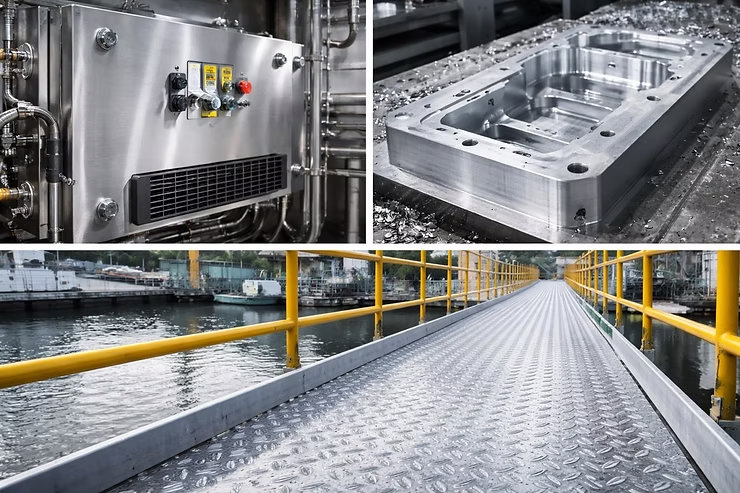
This article P & P Non Ferrous Ltd focuses on three stocked lines that cover common requirements. For thin work up to 3mm, we supply aluminium sheet in 1050A in H14 or H24 temper. For thicker sections up to 50mm, we supply aluminium plate in 6082-T6 which is widely used for structural and machined parts. For flooring, access and covers where grip matters, we supply aluminium tread plate in 5754-H114.
Sheet vs plate: a quick distinction
In supply terms, sheet is typically thinner material used for forming and general fabrication. Plate is thicker material chosen for stiffness, machining allowance and structural performance. If you’re deciding between the two, it usually comes down to how much stiffness you need and whether the part will be formed or machined from solid.
1050A sheet up to 3mm: formed parts and clean finish
1050A is a commercially pure aluminium, often selected when formability and surface finish matter or when conductivity is important. It’s commonly used for light fabrications such as covers, guards, linings, flashings, trims and ducting.
The temper affects how the sheet behaves on the brake. H14 and H24 are both strain hardened conditions. H14 is a good balance of stiffness and formability for general sheet metal work. H24 is strain hardened and stabilised which can suit applications where you want a little more stability in the finished part. If you’re pushing tight bends or complex forms, it’s worth saying so at enquiry so the most suitable temper can be supplied.
6082-T6 plate up to 50mm: structural strength and machining performance
6082 is an aluminium magnesium silicon alloy and the T6 temper means it has been solution heat treated and artificially aged to increase strength. It’s a practical choice for brackets, fixtures, base plates, frames, tooling and general structural work where strength-to-weight matters and it machines well.
One point to consider is welding. 6082 is weldable, but welding can reduce strength in the heat affected zone. If the welded joint is highly loaded, factor that into the design. For thick plate that’s being heavily machined, it can also help to plan for stress release by roughing, allowing the part to settle then finishing to size.
5754-H114 tread plate: grip and durability in service
5754 is an aluminium magnesium alloy with good corrosion resistance and it’s regularly used in outdoor and marine environments. In H114 tread plate, it’s a straight-forward option for walkways, platforms, access covers, step systems and vehicle floors where slip resistance and wear matter.
Because the pattern becomes part of the finished surface, it’s worth stating if pattern direction or appearance matters and checking clearances where the raised pattern could affect fit.
Getting the right material, first time
To keep things moving, specify the grade and temper, thickness, quantity and whether you need full sheets or cut sizes. It also helps to mention what you’re doing with the material, for example folding, rolling, welding or machining, so the right option and allowances can be recommended.
Aluminium sheet in 1050A-H14 or H24, aluminium plate in 6082-T6 up to 50mm and 5754-H114 tread plate cover a lot of typical requirements. If you send your sizes and application, the P&P Bornmore Metals team can advise on the best route, confirm availability and supply cut to size so it arrives ready for the next step.